
There is no single right interval for flying a construction site. Set the schedule by two things: how fast the site changes visibly from above, and who needs the footage and when. Fly more often during phases with big exterior change, such as earthwork, foundations and structure, and less often once work moves inside the building.
A fixed calendar is easy to set, but it often wastes visits. Some weeks the site looks completely different from the air. Other weeks, the only changes are inside the walls, where a drone sees nothing. The better approach is to plan flights around milestones and around the people who will use the images.
Which project phases benefit most from frequent flights?
The value of an aerial photo depends on how much has changed since the last one. Here is how that tends to play out by phase.
Site clearing and earthwork
This is when the ground itself changes shape. Grading, excavation, utility trenches and stockpiles all read clearly from above. If anyone needs to track earth moved or confirm where underground work was placed before it is buried, this phase is worth flying on a tight schedule.
Foundations and underground work
Footings, slabs and buried utilities disappear quickly once they are covered. A flight just before a pour or before backfill gives you a record of what went into the ground. Tie these flights to the inspection and pour schedule rather than to the calendar.
Structure and framing
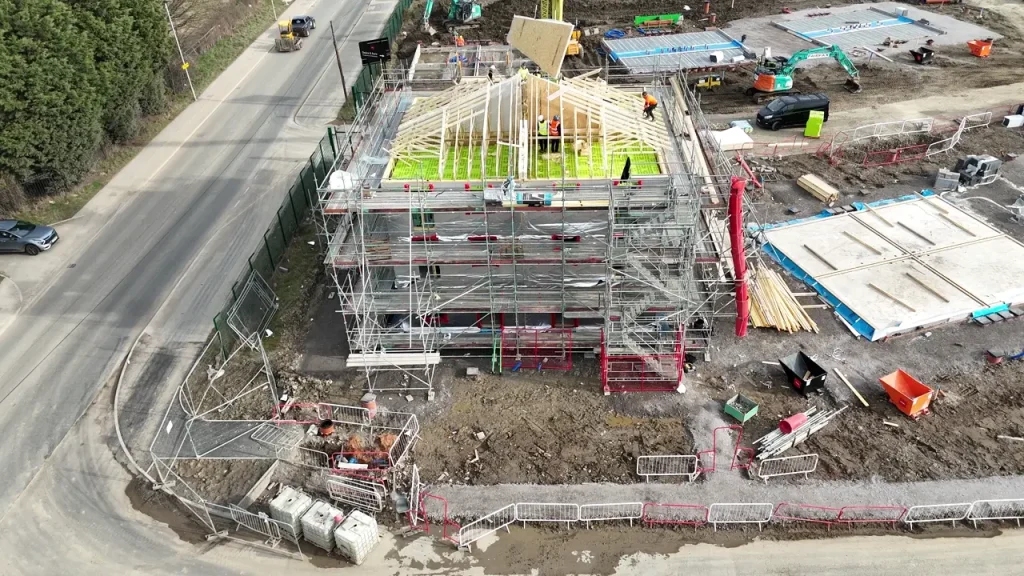
Steel, precast or framing goes up fast and makes the most dramatic progress images of the whole job. Owners and marketing teams usually want the most coverage here.
Enclosure and roofing
Roof, walls and windows still change the exterior view, but more slowly. Flights can usually spread out during this stretch.
Interior finishes
From the air, the building looks almost the same week to week. Aerial flights add little here. Ground-level photo and video inside the building tells the story better.
Site work and closeout
Paving, landscaping and final site work change the view again. Plan a final flight once the site is clean, the landscaping is in and the weather cooperates, because that set of images is the one most likely to end up on a website or in a proposal.
Who needs the footage, and how does that change the schedule?
The same flight can serve several audiences, but each one has its own timing.
- Owners and developers often want regular visual updates they can share with their own stakeholders. A predictable schedule, such as one flight before each owner meeting, keeps everyone working from the same picture.
- Project managers and superintendents care about specific moments: before a pour, before backfill, after a major delivery. Their needs point to milestone-based flights.
- Marketing teams want the strongest images, not the most images. They benefit most from the structure phase, the finished exterior, and footage that can be cut into a time-lapse.
- Future bids rely on finished-project photos and a clear before-and-after. That requires at least one early flight and one final flight from the same positions.
If you are planning how the footage will feed your website and social channels, our post on turning one job site visit into a content plan covers that side. This page is only about how often to fly.
Why does flying from the same spots matter more than flying often?
Progress photos are useful because they can be compared. A shot from a different angle, height or direction each visit makes it hard to see what changed. A short list of fixed positions, repeated on every flight, turns a pile of images into a record. It also makes before-and-after comparisons and time-lapse sequences possible later.
Once those positions are set, fewer well-matched flights usually beat many inconsistent ones.
What can push a flight off schedule?
Weather and rules both shape when a drone can go up. Under the FAA’s Part 107 rules for small drones, a commercial flight needs at least 3 statute miles of visibility, must stay clear of clouds by set distances, and generally stays at or below 400 feet above ground level. The pilot or a visual observer must keep the drone in sight throughout. Sites inside controlled airspace near an airport also need authorization before a flight.
Build a little slack into any schedule so a windy or low-cloud day does not mean a missed milestone. Rules change, so check the FAA’s official pages for the current requirements.
How do you set a schedule for your project?
Start with the phase plan and the list of people who need images. Mark the milestones that must be captured, add any regular owner updates, and plan the final flight. That gives you a visit count you can actually budget against. On-site drone time is $150 per hour and editing is $125 per hour, bought in prepaid blocks of 10, 20 or 40 hours. The construction drone photography page explains the service, and the pricing page shows how the hour blocks work.
Call 920-393-7273 or request a quote, and Nick or Brennen will help you map flights to your project schedule. On-site work covers job sites within about 50 miles of Green Bay, and farther sites are quoted with travel.
Frequently asked questions
Should a construction site be flown on a fixed weekly or monthly schedule?
Only if someone needs regular updates on that cycle. Otherwise, plan flights around milestones such as pours, backfill, structure and closeout, and add regular flights only where an audience needs them.
Is a drone useful once interior work starts?
Less so. The exterior changes little during interior finishes, so ground-level photo and video inside the building usually tells the story better until site work and closeout begin.
What makes progress photos comparable from flight to flight?
Shooting from the same positions, heights and directions every visit. Consistent framing lets anyone see what changed and makes before-and-after images and time-lapses possible.